First Day Introductions
Today is August 6th; I just got back from my first day of interning with Dr. Tucker at John’s Hopkins Hospital! I started promptly at 8am when I met Dr. Tucker and her lab technician, Lisa, on the main floor of the Children’s Hospital.
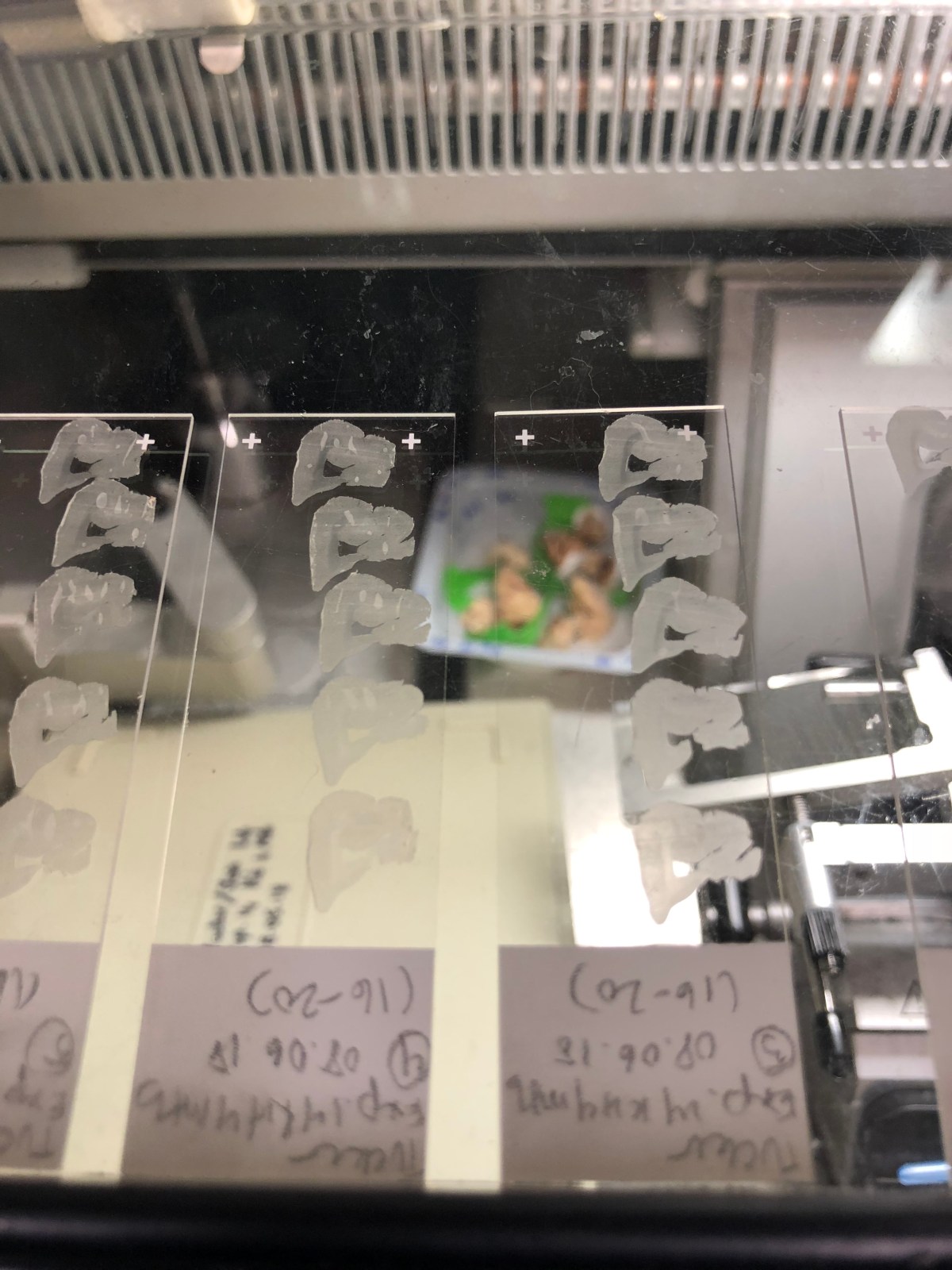
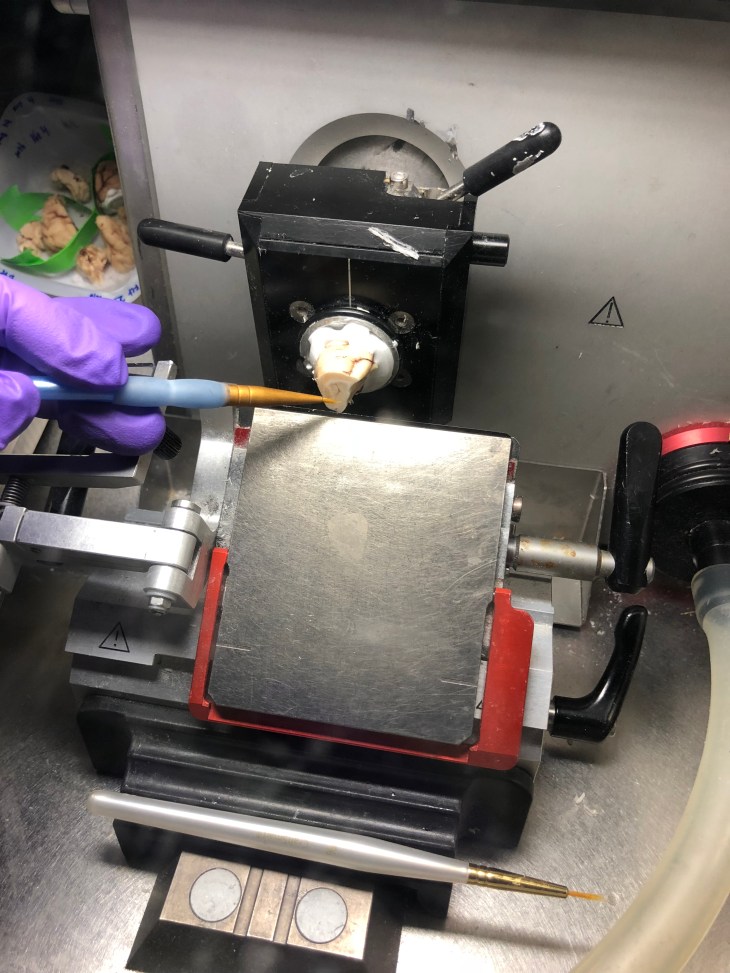
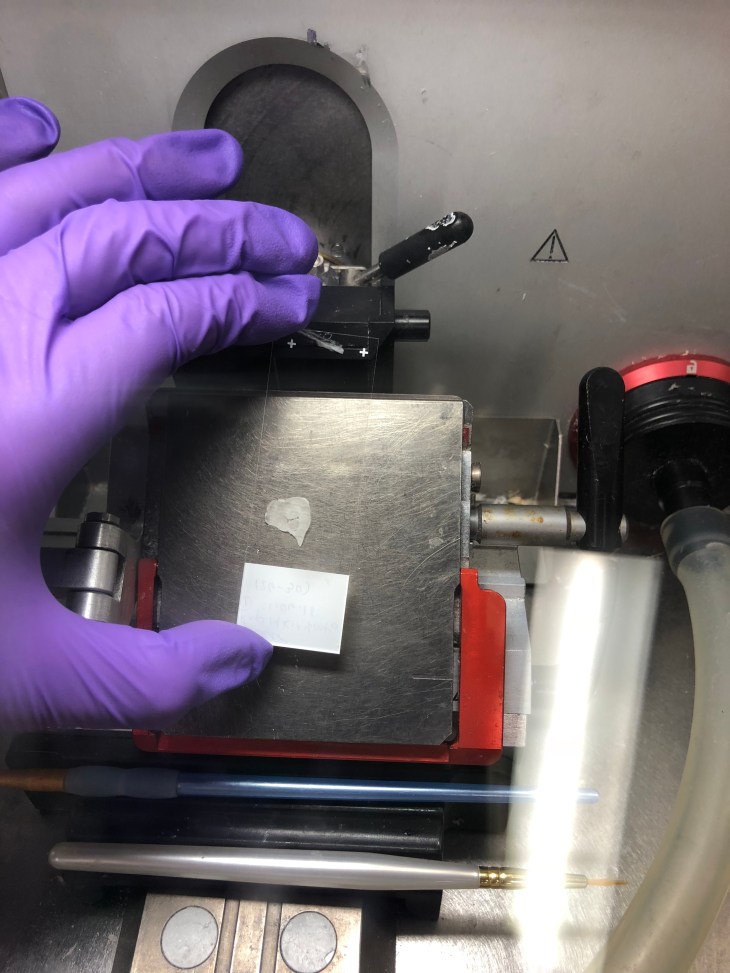
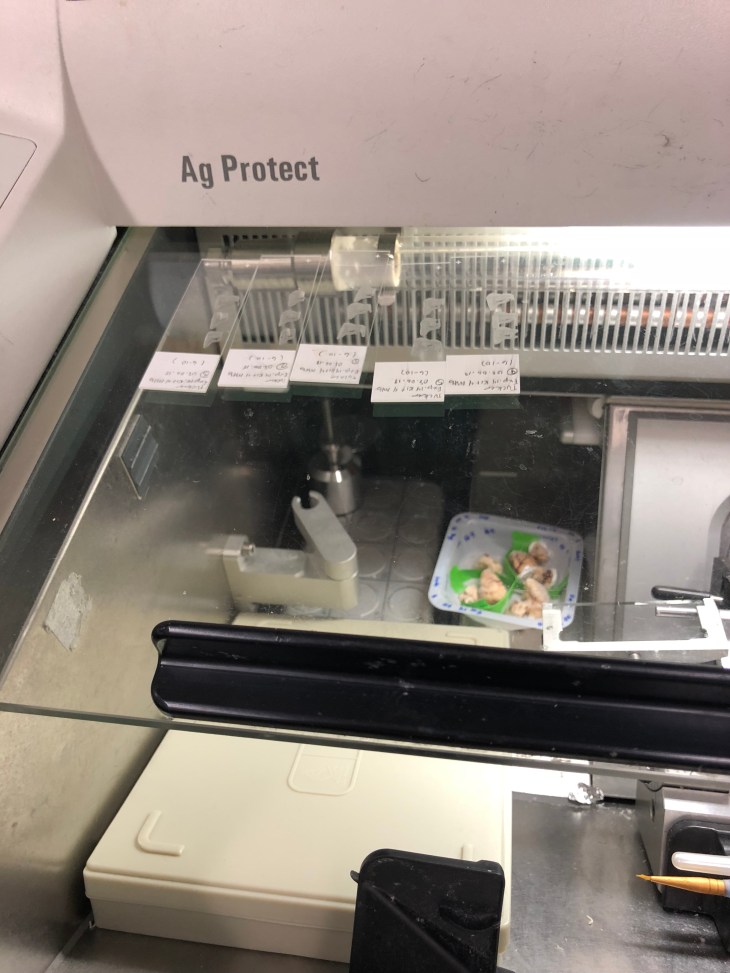
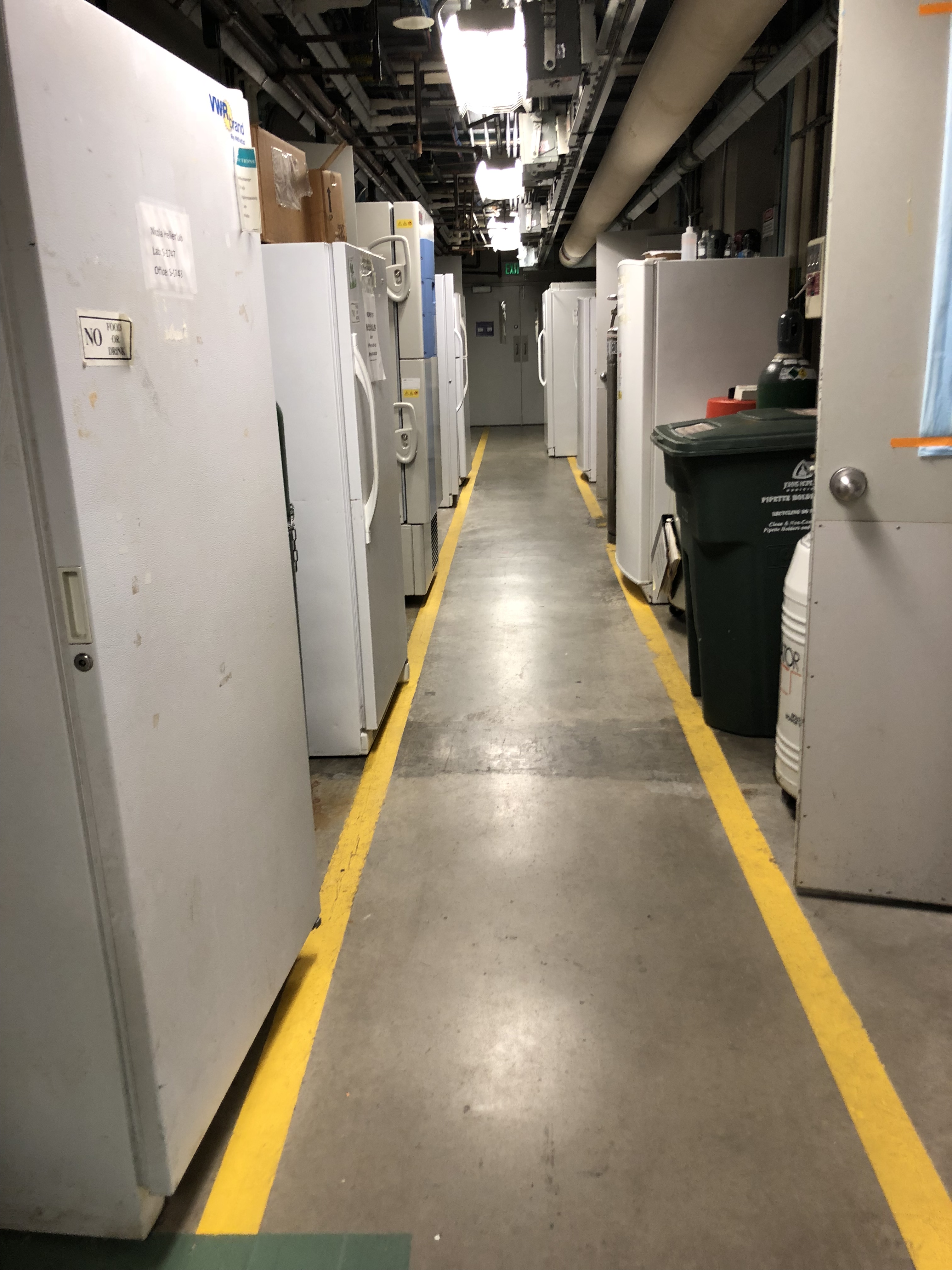
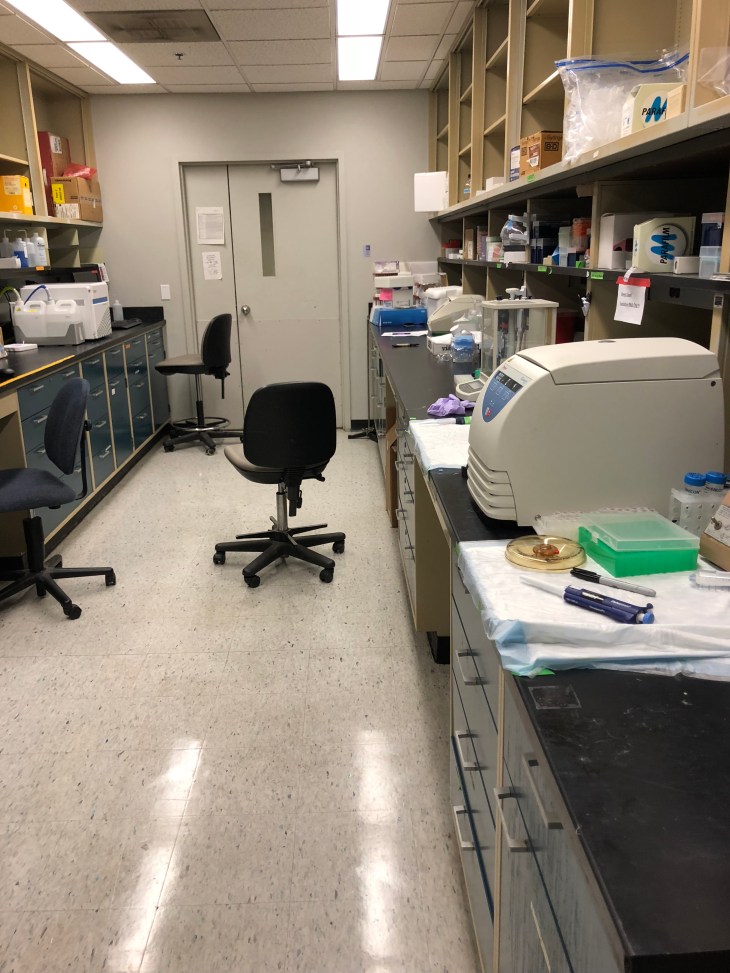
To start off the day, Dr. Tucker took me for a brief tour around her lab area where I would be working. We took a service entrance (which was very eerie as it was just lines and lines of freezers, marked -80 degrees Celsius) to get to her lab, and Lisa began to introduce me to the cryostat, which I would end up working with for a few hours. Once I got the hang of it, I was quickly labeling 5 slides at a time and slicing the right hemisphere of a rabbit from kit #4 exposed to TB. The slicing process and putting the specimen on the slide was the most meticulous work. First, you have to crank a lever to bring the specimen to the blade, and then you have to slowly wind it as it lowers to the blade. As this is happening and you are slicing the brain paper thin, you have to use a paintbrush (or two) to flatten the specimen out since it likes to curl in the freezing temperatures (basically, it was being kept at -20 degree Celsius, so I felt like my hands were stuck in a freezer all day). After I had about 5 slices on each slide, I would place them in the slide holder and put them back in the cryostat to keep them cool.
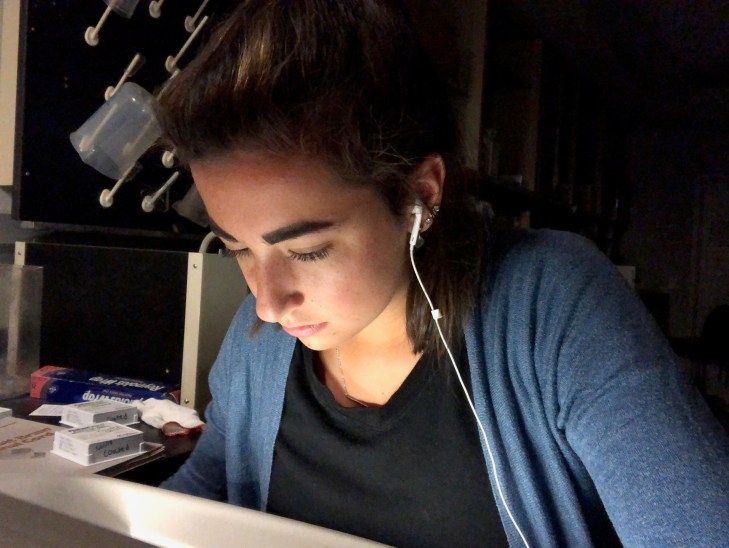
Below: Helping the specimen along the blade with a paintbrush so it doesn’t curl
Repeat the process for about two hours, and then Dr. Tucker drops back in after a meeting to announce it was lunchtime. Cool!
Lunch was a great opportunity for me to ask some questions and for us to get to know each other a little bit more. I could go on for a long time about my questions and her answers, so at the end of each blog I’ll briefly cover what I asked and what she said!
After lunch, Dr. Tucker took me on a more extensive tour of the surrounding area. We left the children’s hospital and went to the research building, where I got to meet the rest of her research team. I quickly noticed a large number of females which made me excited! I got to watch her interact with her team as they discussed their findings on a certain experiment, and they effortlessly divulged into what they liked, didn’t like, didn’t expect, and how they wanted to modify things for next time. The amount of passion for their research was clearly evident in their conversations!
Once she had checked in with her team, she took me to where the rabbits and other test animals are kept. I had to put on a yellow smock and booties, in order to prevent the spread of some bacteria as we were in biohazard safety level 2. I got to see where the animals were kept, along with the rooms where they inject the TB virus and measure different elements with various tests. She showed me their PET and CT scanners, which look a lot like the ones we have, just much smaller. They also have special tubes to put the sedated animals in.
As we disposed of our smocks and booties, we headed up to talk with Dr. Tucker’s mentor, and I got to see their interactions with one another in terms of their research. They talked about a paper they want to publish, some revisions to make, and why they were necessary. It was very similar to revising papers with teachers at school!
We proceeded back to our original spot soon after. I got to go back to working with the cryostat, and I felt I finally had the hang of it. All of a sudden, it was 4pm, and it was time for me to head out! Time went by way faster than I expected. Dr. Tucker showed me how to clean up and dispose of what needed to be disposed, and then we headed out to the main entrance. She answered a few of my last minute questions and then we made plans for our second and third days together. She had to run off to another meeting, so I quickly said thank you and goodbye before heading out.
Below: placing the slide over the slice of the brain to adhere it to the slide
Brief Questions with Briefed Answers
Q: What are the differences between the Biohazard safety levels?
A: The level depends on how the pathogen can be spread. A level 2 is most likely only through physical contact, while a level 3 could be airborne or through expulsion like a sneeze.
Q: Was it hard working with animals at first and has it gotten easier?
A: It was definitely hard at first. We euthanize them when they start getting sick to harvest their organs for research, so the animals never really feel any pain. I personally don’t do a lot of the injecting, our chemists and technicians do, so it’s also a bit easier to focus on what you need, in terms of research data.
Q: Obviously the brain is one of the major organs in terms of harvesting after death, since the injection site is in the brain. Are there any other organs you usually strive to get or want to study?
A: It depends on the case. In one experiment, we found that the pathogens had spread from the brain to the lungs through the lymphatic passages (or so we believe). So, in that case, we made sure we got at least the lungs and brain. In other cases, people have harvested the stomach, heart, intestines, etc. It really depends on your freezer space too!
Q: Why do you test with rabbits rather than mice or other animals? What is the best animal to do so with, and how do you translate that to humans (children) since our bodies don’t respond the same way to everything?
A: They really don’t, which is why some of our process and findings never translate to patients. It’s a lot of trial and error. In terms of what animals we use, we found that mice have a certain “knock out” gene or ability that can help us isolate parts of the body to watch for responses. However, their brain development happens mostly before they are born, unlike humans, so we found out that it was not the most effective for pediatric patients. We use rabbits because their development is very similar to human children (with the brain taking a year to develop immensely and the skull hardening after birth), so we knew our results were going to be similar to what it would be like with an infant or toddler. In the best case scenario, we could use monkeys, since they are the most similar to us, but monkeys are hard to come by due to price, and we can’t experiment the way we need to in order to find results (in terms of euthanizing & harvesting organs for research).
 Madison's Summer at Johns Hopkins Hospital